Recent Posts
What Iran’s New Persian Gulf Strait Authority Means for International Shipping Costs
May 15, 2026
Introduction
Global shipping routes are among the most sensitive parts of international trade. Even small policy changes in key maritime regions can influence freight rates, shipping schedules, and supply chain planning worldwide. In 2026, growing attention has shifted toward Iran’s newly introduced Persian Gulf Strait Authority and its potential impact on global logistics operations.
The Strait of Hormuz remains one of the world’s most important shipping corridors, connecting major oil producers and international trade routes. Any operational, political, or regulatory change affecting this region immediately attracts global attention because it directly influences shipping confidence, fuel markets, and freight costs.
For businesses involved in international trade, understanding how these developments affect logistics operations is now more important than ever.
In this blog, we explore what Iran’s new Persian Gulf Strait Authority could mean for international shipping costs and how businesses may need to adapt their shipping strategies moving forward.
Why the Persian Gulf Strait Matters to Global Shipping
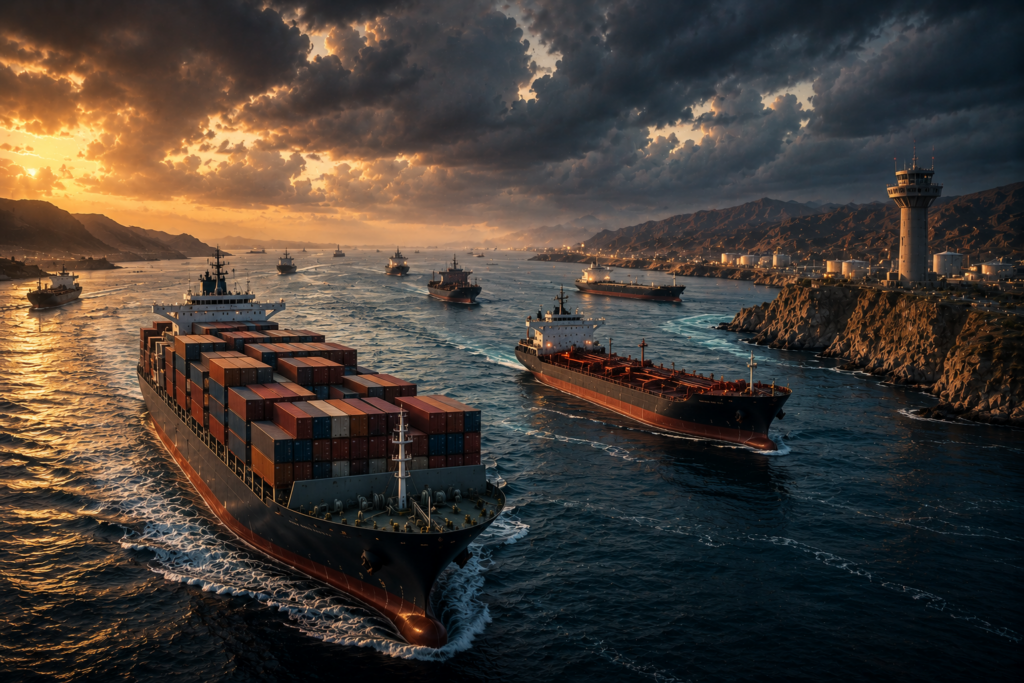
The Persian Gulf shipping corridor is one of the busiest maritime routes in the world.
It is strategically important because:
- A major percentage of global oil exports pass through it
- International cargo vessels rely on the route for trade movement
- It connects Middle Eastern markets with Asia, Europe, and Africa
Any uncertainty in this region quickly impacts global shipping operations.
What Is the New Persian Gulf Strait Authority?
Iran’s new authority is expected to focus on:
- Maritime oversight
- Shipping regulation
- Security coordination
- Vessel movement management
While operational details continue to evolve, global logistics markets are closely monitoring how these changes could influence shipping conditions in the region.
Why International Shipping Markets Are Paying Attention
Shipping companies and logistics providers are highly sensitive to geopolitical developments in major trade corridors.
Changes in maritime governance can affect:
- Route stability
- Insurance costs
- Vessel scheduling
- Operational risk assessments
Even the perception of increased uncertainty can impact freight pricing globally.
How Shipping Costs Could Be Affected
1. Increased Insurance Costs
When shipping routes are viewed as higher risk:
- Marine insurance premiums often increase
- Carriers adjust operational pricing
Higher insurance costs are usually passed through the supply chain.
2. Rising Fuel and Operating Costs
If vessels:
- Change routes
- Slow transit speeds
- Experience delays
fuel consumption and operational expenses rise.
This directly affects freight pricing.
3. Potential Congestion and Delays
Operational uncertainty can create:
- Port congestion
- Scheduling disruptions
- Delayed cargo movement
Delays increase container and logistics costs.
4. Freight Rate Volatility
Freight markets react quickly to geopolitical uncertainty.
As confidence changes:
- Shipping rates fluctuate
- Capacity availability changes
- Logistics planning becomes more difficult
Businesses face higher unpredictability.
Why Businesses Are Rethinking Shipping Strategy
Recent global events have shown that relying heavily on a single trade corridor creates risk.
Businesses are now:
- Diversifying shipping routes
- Building regional inventory buffers
- Strengthening warehousing support
The focus is shifting from lowest-cost logistics to resilient logistics.
Impact on Global Supply Chains
Even companies far from the Middle East may feel the impact.
Possible effects include:
- Increased import/export costs
- Longer transit times
- Inventory planning challenges
- Distribution delays
Global supply chains are deeply interconnected.
How Logistics Companies Are Responding
Shipping and logistics providers are adapting by:
- Monitoring geopolitical developments closely
- Offering flexible routing options
- Improving cargo visibility systems
- Expanding regional warehousing support
Flexibility has become critical in modern logistics operations.
Comparison: Stable Trade Routes vs High-Risk Corridors
| Area | Stable Shipping Route | High-Risk Trade Corridor |
|---|---|---|
| Freight pricing | Predictable | Volatile |
| Transit time | Consistent | Uncertain |
| Insurance cost | Lower | Higher |
| Operational risk | Moderate | Elevated |
| Supply chain planning | Easier | Complex |
Risk directly affects logistics cost.
Real-World Operational Insight
A regional importer relying on Gulf shipping routes experienced major pressure during previous regional disruptions.
Initial impact:
- Shipping schedules became inconsistent
- Freight costs increased rapidly
- Inventory shortages affected customer orders
To stabilize operations, the company:
- Increased warehouse inventory levels
- Diversified suppliers and shipping routes
- Improved coordination with logistics partners
As a result:
- Delivery reliability improved
- Inventory shortages reduced
- Supply chain stability increased
This highlighted the importance of proactive logistics planning.
Why Warehousing Becomes More Important During Shipping Uncertainty
When shipping conditions become unstable, warehousing plays a bigger strategic role.
Warehouses help businesses:
- Hold buffer inventory
- Manage delayed shipments
- Support regional distribution
Strong warehousing reduces supply chain pressure during uncertain periods.
How Businesses Can Prepare for Shipping Volatility
1. Diversify Shipping Options
Businesses should avoid depending on one route or region.
Alternative shipping plans improve resilience.
2. Strengthen Inventory Management
Maintaining strategic inventory levels helps reduce disruption impact.
3. Improve Logistics Visibility
Real-time tracking and communication improve response speed during delays.
4. Build Flexible Supply Chain Systems
Flexible logistics operations adapt faster to changing conditions.
This includes:
- Warehousing flexibility
- Distribution planning
- Coordinated cargo handling
How LTB Shipping Supports Businesses During Global Logistics Uncertainty
LTB Shipping helps businesses navigate complex international shipping conditions through:
- Coordinated freight management
- Flexible shipping support
- Cargo visibility and tracking
- Efficient logistics planning
By improving operational coordination and adaptability, LTB Shipping helps businesses maintain reliable international trade performance even during uncertain global conditions.
Long-Term Outlook for International Shipping
Global shipping will likely remain influenced by:
- Geopolitical developments
- Fuel market fluctuations
- Maritime security concerns
Businesses that invest in resilient logistics systems will be better prepared for future disruptions.
Conclusion
Iran’s new Persian Gulf Strait Authority has added another layer of uncertainty to global shipping markets. While the long-term impact is still developing, businesses worldwide are already rethinking logistics planning, shipping routes, and supply chain strategies.
Rising freight costs, insurance pressures, and operational uncertainty highlight the need for flexible and resilient logistics systems. Businesses that improve visibility, diversify operations, and strengthen warehousing support will be better positioned to manage future challenges.
With experienced partners like LTB Shipping, companies can navigate changing global trade conditions with greater confidence and operational stability.
Call to Action
Is your business prepared for changing global shipping conditions?
If you want to improve freight planning, strengthen international logistics operations, and build a more resilient shipping strategy, contact LTB Shipping today and stay prepared for the future of global trade.