Recent Posts
What the Strait of Hormuz Reopening Means for International Shipping Businesses
April 13, 2026
Introduction
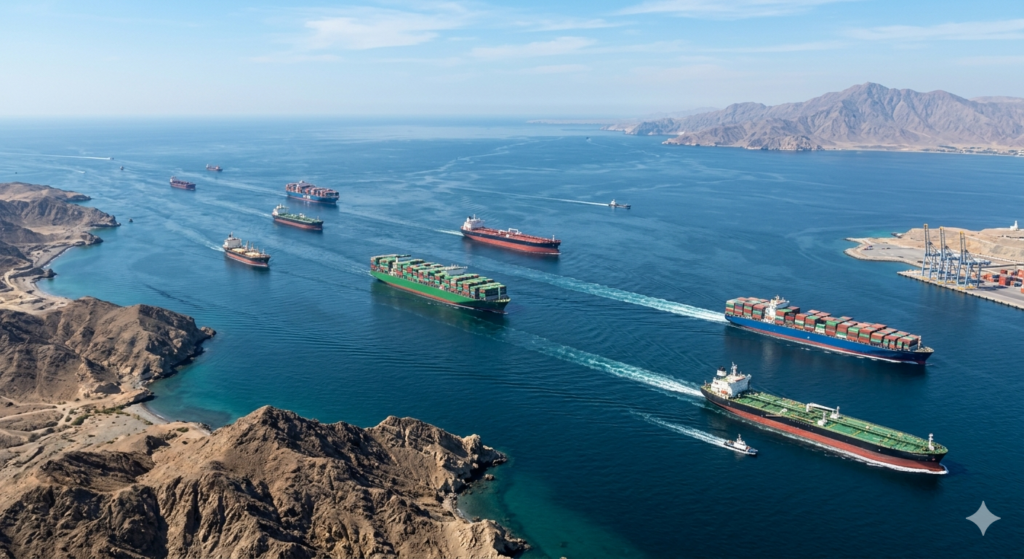
The Strait of Hormuz. Twenty-one nautical miles wide at its narrowest point. One of the most intensely watched stretches of water on earth. And for international shipping businesses of every size, the single most consequential maritime development of 2026.
Since late February, when the United States and Israel launched military operations against Iran and the Islamic Revolutionary Guard Corps effectively closed the strait to commercial traffic, global shipping has been operating in a state of crisis that has driven oil prices to record highs, stranded hundreds of vessels and thousands of seafarers, disrupted supply chains across dozens of countries, and added billions of dollars in costs to international trade. Every business that imports or exports goods, buys fuel, or depends on internationally traded commodities has felt the consequences.
Now, with a ceasefire announced and diplomatic efforts continuing despite significant setbacks, the question on every logistics manager’s mind is the same. What does the reopening of the Strait of Hormuz actually mean for my business, and what should I be doing right now to prepare?
The answer is not simple, and anyone who tells you it is has not looked closely enough at what is actually happening. The Strait of Hormuz remained effectively closed even after the ceasefire, with Iran limiting the number of ships that can cross and charging tolls of over one million dollars per ship. Wikipedia The reopening, when it comes fully, will be one of the most consequential developments for global shipping in years. But its implications for international shipping businesses extend far beyond the simple question of whether vessels can transit the waterway. They touch freight costs, route strategies, insurance structures, cargo planning, and the long-term design of supply chains that serve the Middle East and depend on Gulf energy.
This blog provides a thorough, honest, and practically useful assessment of what the Strait of Hormuz reopening means for international shipping businesses, what the timeline and conditions for normalization look like, and what steps businesses should be taking right now to position themselves for the recovery ahead.
1. Understanding What Is Actually at Stake
1.1 The Scale of What the Strait Carries
Before assessing what the reopening means, it is essential to understand precisely what has been disrupted and why its restoration matters so profoundly for international shipping businesses worldwide.
Until the conflict, approximately 25% of the world’s seaborne oil trade and 20% of the world’s liquefied natural gas passed through the Strait of Hormuz, primarily from producers like Saudi Arabia, the United Arab Emirates, Iraq, and Qatar. Wikipedia
Beyond oil and gas, the picture is equally striking. The Persian Gulf is a major hub for global fertilizer production and exports. In the 2020s the region has accounted for roughly 30 to 35 percent of global urea exports and around 20 to 30 percent of ammonia exports. Overall, up to 30 percent of internationally traded fertilizers normally transit the Strait of Hormuz. Wikipedia
In 2024, an estimated 84 percent of crude oil and condensate shipments through the strait were destined for Asian markets, with China receiving a third of its oil via the strait. Europe gets 12 to 14 percent of its LNG from Qatar through the strait. Wikipedia
For international shipping businesses, this means that the reopening of the strait does not just affect Middle East trade. It affects energy costs, fertilizer availability, and manufacturing input prices for businesses in Asia, Europe, and beyond that may have no direct commercial relationship with the Gulf region.
1.2 The Full Cost of the Closure to Global Shipping
The six-week closure of the strait has inflicted damage on global shipping that extends well beyond the vessels and cargo directly involved. The ongoing disruption was costing Maersk alone roughly 55 million dollars per week. Euronews Across the entire industry, the cumulative costs of route diversions, war risk insurance premiums, stranded vessel operating costs, emergency freight arrangements, and cargo damage from extended dwell times represent an enormous financial toll.
For individual shipping businesses and their customers, the cost has manifested through surcharges, delays, equipment shortages, and the ripple effects of supply disruption that have reached industries and markets far removed from the Persian Gulf. Understanding the full scale of what has been disrupted is the essential starting point for understanding what the reopening will and will not fix, and over what timeframe.
2. The Current Reopening Status: Cautious, Conditional, and Contested
2.1 The Gap Between Announcement and Reality
The April 8 ceasefire announcement described a deal that included the reopening of the Strait of Hormuz as a central condition. The reality on the water has been starkly different from what that announcement implied.
Reopening the Strait of Hormuz is proving to be difficult. But even if the vital waterway fully opens and oil and other necessary cargo sail out, it will not be enough to return things to normal. CNN
Traffic through the Strait of Hormuz has yet to see a meaningful rebound. Transit conditions, toll arrangements, and the legal framework for passage remain undefined, deterring ship owners from passing through the waterway. CNBC
From February 1 to February 27, the average number of vessels passing through the strait was 129 per day before beginning to slow as the war began. Only about a dozen ships passed through in the first two days of the ceasefire, far below the normal traffic level. CBS News
2.2 Iran’s Toll System and What It Means
One of the most commercially significant developments in the reopening situation is the emergence of a toll system for strait transit. Regional officials have indicated that both Iran and Oman are expected to charge transit fees on vessels, marking a departure from the maritime chokepoint’s previous status as a toll-free route. Euronews
Iran was limiting the number of ships that can cross and charging tolls of over one million dollars per ship. Wikipedia For context, a toll of one million dollars per transit on an oil tanker carrying two million barrels of crude oil translates to approximately fifty cents per barrel in additional cost. On a fully laden very large crude carrier, this is a significant but potentially absorbable cost for energy traders. For smaller vessels carrying lower-value cargo, the economics are far more challenging.
The legal dimension of the toll issue is equally contested. The fragile ceasefire between the US and Iran depends on the Strait of Hormuz being opened for ships without limitation, including tolls, according to the White House. CNBC The US position is that Iranian tolls violate the terms of the ceasefire and international maritime law. Iran’s position is that it retains the right to manage and condition traffic through waters it borders. This fundamental disagreement over whether the strait can be tolled has added another layer of commercial and legal uncertainty that is deterring shipping businesses from resuming normal operations.
2.3 The Mine Threat in the Primary Shipping Lane
Beyond the political and commercial complications, there is a concrete physical safety issue that must be resolved before normal transit can resume. The Iranian navy released a map indicating it may have mined the strait and outlined designated shipping lanes vessels should use to transit safely. NBC News
Reports have indicated that Iran lost track of some of the mines it planted, meaning that even routes designated as safe by Iranian authorities cannot be treated as definitively clear without independent verification. US Central Command said its ships are taking part in mine clearance operations, Wikipedia but this is a time-consuming process that cannot be rushed.
The IMO is already working with relevant parties to implement an appropriate mechanism to ensure the safe transit of ships through the Strait of Hormuz, with the priority being to ensure the safety of navigation to guarantee an evacuation without a return to escalation. UN News
3. What Full Reopening Will Mean for Freight Costs
3.1 The Immediate Rate Impact
When the Strait of Hormuz does fully reopen with genuine freedom of navigation restored and commercial traffic resuming at scale, the freight rate impact will be significant. The combination of reduced war risk insurance premiums, elimination of emergency surcharges on Middle East corridor shipments, and the gradual normalization of fuel prices as Gulf oil production recovers will collectively remove a substantial cost layer from international freight rates.
For businesses that have been paying emergency surcharges on top of already-elevated base rates for Middle East corridor shipments, the rate relief from reopening will be meaningful and immediate for newly booked shipments. However, existing spot and contract rate structures will normalize over weeks and months rather than overnight, as carriers work through the operational backlog and the insurance market adjusts its risk pricing.
3.2 Why Fuel Costs Will Remain Elevated for Months
Even after the strait fully reopens, international shipping businesses should not expect a rapid return to pre-conflict fuel cost levels. The energy price shock of the past six weeks has embedded itself into the global economy through mechanisms that take months to unwind.
Without new ships coming through the strait and into the Gulf, production of various goods including crude oil, gasoline and other refined fuels and fertilizer, will remain on hold. Production halted during the past six weeks because there was no place to put those goods, and oil producers around the Gulf are used to just putting oil on a tanker and having it immediately go out. They are going to need time to increase production, but also have the tankers in place to be able to load that crude. CNN
If the strait were to open today, it would still likely take until July for oil flows to get back to normal, CNN according to shipping analytics from Kpler. This three-month-plus normalization timeline for oil flows means that the fuel surcharge component of freight rates will remain elevated through the second quarter of 2026 at a minimum, and potentially well beyond, depending on how quickly Gulf production ramps back up.
3.3 The Backlog Clearance Surge and Its Rate Effects
The process of clearing the backlog of stranded vessels will create its own temporary market dynamics that affect freight rates in ways that businesses need to understand and plan around.
There are about 400 loaded oil tankers in the Gulf waiting to get out, but only about 100 empty tankers eager to get in. There are also about 100 container ships waiting to exit, but virtually none waiting to enter. CNN
This one-directional backlog flow will temporarily flood outbound routes from the Gulf with cargo that has been accumulating for six weeks, driving outbound rates down from their crisis levels rapidly as the backlog is discharged. Simultaneously, the shortage of inbound vessel capacity entering the Gulf will keep inbound rates and capacity constraints elevated for longer, creating an asymmetric rate environment that affects different businesses differently depending on the direction of their trade flows.
4. What Reopening Means for Specific Cargo Types and Trade Lanes
4.1 Oil and Energy Tankers
For businesses operating in the oil and energy sector, the reopening of the strait is the essential precondition for restoring the supply chains that have been catastrophically disrupted over the past six weeks. The immediate priority for oil tanker operations will be the orderly evacuation of the backlog of loaded tankers from the Persian Gulf, followed by the gradual return of empty tankers to load the next cycle of Gulf oil exports.
The pace of this recovery will be governed by the confidence of tanker owners and their insurers that the strait will remain open, the speed of mine clearance in the primary shipping lane, the restoration of war risk insurance coverage at commercially viable premium levels, and the pace at which Gulf producers can bring their shut-in production back online. Businesses dependent on Gulf crude oil deliveries should plan for constrained volumes and elevated prices through at least mid-year even under an optimistic reopening scenario.
4.2 LNG and Fertilizer Shipping
For LNG and fertilizer trade flows, the reopening picture is even more complex. The damage to Qatari LNG export infrastructure during the conflict means that even with the strait fully open, LNG export volumes from Qatar will be well below pre-conflict levels for an extended period. Businesses that depend on Qatari LNG supply, particularly European gas importers and Asian industrial consumers, face a structurally tighter supply environment that will persist regardless of the political resolution of the conflict.
For fertilizer shipping, the restoration of Gulf urea and ammonia export flows through the strait will be an important signal for agricultural commodity markets that have been affected by input cost increases during the closure. The timing of this restoration relative to Northern Hemisphere planting seasons makes it particularly consequential for agricultural supply chains globally.
4.3 Container Shipping to and from Gulf States
For businesses engaged in container trade with Gulf states, whether importing manufactured goods, exporting food and consumer products, or managing re-export supply chains through Dubai and other regional hubs, the reopening creates both immediate opportunities and near-term operational challenges.
The issue is not solved until all the ships have left the Strait of Hormuz, because there are hundreds of thousands of containers at ports in India, Oman, and Pakistan, which need to be transported into the Persian Gulf, CNBC according to Hapag-Lloyd. The backlog of inbound container cargo waiting to enter the Gulf represents months of pent-up demand that will create a surge of inbound bookings and significant port congestion at Gulf terminals as the strait reopens and services resume.
Businesses importing to Gulf destinations should anticipate an initial period of constrained capacity and elevated rates as carriers manage the surge of pent-up demand. Those exporting from Gulf states will benefit from the restoration of outbound container services, though the initial backlog clearance period may require patience with extended booking timelines.
5. The Insurance Dimension: What Changes and When
5.1 War Risk Insurance Recovery
The war risk insurance market, which had been largely withdrawn from the Strait of Hormuz corridor during the conflict and was available only at dramatically elevated premiums where it existed at all, will be the key financial signal to watch as the reopening progresses. The return of commercial war risk insurance coverage at reasonable premium levels is both a prerequisite for and an indicator of genuine maritime security normalization in the strait.
The insurance market’s return will not be immediate. Underwriters will require a sustained period of demonstrably safe commercial transit through the strait before they will commit coverage at pre-conflict premium levels. The first transits will likely occur under enhanced premium structures that gradually reduce as the risk track record of the reopened corridor accumulates. For shipping businesses, monitoring the trajectory of war risk insurance premium levels in the strait will provide one of the most reliable leading indicators of how quickly full operational normalization is progressing.
5.2 The New Toll Structure and Insurance Implications
The potential emergence of a formal toll structure for Strait of Hormuz transit introduces a new commercial variable that did not exist before the conflict. If a toll system were introduced in Hormuz, it would likely require broad international agreement. NBC News A toll system that has international legal legitimacy and predictable administration is very different from the current ad hoc permission and toll regime that Iran has been imposing unilaterally.
For shipping businesses, the commercial implications of a formalized toll system depend entirely on the toll level, the administrative mechanism for payment, and whether the toll applies to all vessels equally or creates a tiered system based on cargo type, flag state, or other criteria. A transparent, legally grounded toll structure would be preferable to the current uncertainty and could actually facilitate the insurance market’s return to the corridor by providing predictable operating cost parameters that can be incorporated into commercial risk assessments.
5.3 Building Permanent Insurance Resilience
For businesses whose supply chains have significant exposure to the Strait of Hormuz corridor, the crisis has highlighted the need for a more sophisticated approach to marine insurance than simply obtaining standard cargo cover and assuming transit risk is managed. Businesses that work with specialized marine insurance brokers, maintain relationships with war risk underwriters, and regularly review their coverage against current risk assessments will be far better positioned when the next disruption event occurs than those who regard insurance as a standard annual renewal exercise.
6. The Container Equipment and Capacity Recovery
6.1 Why Equipment Shortages Will Persist
The Strait of Hormuz closure has created a severe container equipment imbalance that will take months to correct even after transit is fully restored. The shortage of empty containers in Gulf export locations and the accumulation of containers at alternative transit hubs in India, Oman, Pakistan, and East Africa means that the equipment repositioning needed to restore normal cargo flow patterns requires an extended period of container fleet rebalancing.
For exporters from Gulf states, this equipment shortage translates into booking difficulties, rate premiums for the limited available slots, and extended lead times before normal shipping rhythms can be restored. For importers into Gulf destinations, the initial surge of pent-up inbound demand competing for a limited number of available vessels and container slots will create elevated rates and constrained capacity in the immediate post-reopening period.
6.2 Vessel Capacity Redeployment
Major shipping alliances that redirected their Gulf service rotations during the conflict will need to rebuild Gulf port calls, reassign vessels to restored services, and manage the transition from crisis routing back to normal network configurations. This redeployment process takes weeks to plan and execute and involves coordination across multiple carriers and alliances whose crisis-period arrangements have created new scheduling and vessel positioning challenges.
For shipping businesses that depend on regular scheduled services between specific port pairs, the resumption of normal service schedules may lag behind the physical reopening of the strait by several weeks as carriers work through vessel redeployment logistics.
7. Long-Term Implications for Supply Chain Strategy
7.1 The Permanent Change in Risk Perception
Perhaps the most enduring consequence of the Strait of Hormuz crisis for international shipping businesses is the fundamental reassessment of geopolitical risk in global supply chain design that the event has forced. Before February 28, 2026, most supply chain risk models treated Strait of Hormuz closure as a low-probability tail risk that did not warrant major strategic investment to hedge against. The events of the past six weeks have demonstrated that the tail risk is not as improbable as it appeared, and that its consequences when it materializes are severe enough to justify meaningful structural investment in supply chain resilience.
Businesses are now being required to think seriously about questions that were previously treated as theoretical. How much of my supply chain depends on goods that transit the Strait of Hormuz? What alternative supply sources exist for my most critical inputs? How long can I sustain operations if Gulf oil and gas is unavailable for an extended period? These are not comfortable questions, but they are necessary ones, and the supply chain strategies that emerge from serious engagement with them will be materially more resilient than those built on the assumption that the strait will always be open.
7.2 Diversification as a Strategic Priority
The crisis has accelerated the trend toward supply chain diversification that was already underway in response to the COVID-19 pandemic, the Red Sea Houthi disruptions, and the broader pattern of geopolitical uncertainty that has characterized the 2020s. For businesses that source energy-intensive inputs, chemicals, fertilizers, or manufactured goods from Gulf state producers, the case for qualifying alternative suppliers in less geopolitically exposed regions has never been stronger.
This diversification does not mean abandoning Gulf supply chains, which offer genuine competitive advantages in many product categories. It means building the alternative supplier relationships and logistics arrangements that provide options when primary routes are disrupted, without the emergency premium that characterizes crisis-period sourcing decisions.
7.3 The Case for Strategic Inventory Investment
The crisis has demonstrated once again that the working capital cost of safety stock is consistently lower than the combined cost of production disruptions, emergency freight, and customer service failures that occur when safety stock is inadequate to buffer supply chain shocks of meaningful duration. Businesses that were caught with minimal inventory buffers when the strait closed in late February faced crisis management challenges that dwarfed the cost of maintaining adequate safety stock would have entailed.
The post-crisis period is an appropriate moment to review safety stock policies for inputs with significant Middle East supply chain exposure and to calibrate buffer stock levels against realistic risk scenarios rather than optimistic assumptions of supply chain stability.
7.4 Route Diversification and Alternative Logistics Networks
The Cape of Good Hope routing, the overland Trans-Arabian and Indian subcontinent corridors, and the air freight networks that expanded dramatically during the crisis have demonstrated their value as genuine alternatives to the Strait of Hormuz routing for various cargo types and urgency levels. Maintaining these alternative routing capabilities in a state of readiness, rather than allowing them to atrophy as normal strait operations resume, provides ongoing resilience at relatively modest additional cost compared to the crisis management expenses that unpreparedness creates.
8. A Realistic Reopening Timeline for Planning Purposes
Based on the most credible available analysis from shipping industry experts, the following phased timeline provides a realistic framework for business planning around the Strait of Hormuz reopening.
In the immediate term through the end of April, the focus will be on political stabilization, mine clearance progress, and insurance market assessment. Transit volumes will remain well below normal, predominantly comprising outbound loaded vessels evacuating the backlog. Freight rates and fuel surcharges on Middle East corridor shipments will remain at elevated levels. Businesses should maintain alternative routing arrangements and elevated safety stock positions.
Through May and June, assuming diplomatic progress enables a more stable and clearly defined transit framework, outbound backlog clearance will accelerate and the first inbound vessel calls to Gulf ports will begin to rebuild at scale. Container services to Gulf destinations will begin to restore scheduled calls with increasing frequency. Oil production ramp-up will begin in earnest. War risk insurance premiums will begin to decline from crisis peaks but will remain above pre-conflict levels. Freight rates will ease from crisis levels but will remain elevated relative to pre-conflict norms.
Expert analysis from shipping intelligence firms suggests that even if the strait opens fully today, it would still likely take until July for oil flows to get back to normal. CNN From July onward, with sustained open navigation, progressive oil production recovery, and container equipment rebalancing, a gradual normalization of freight rates toward pre-conflict levels can be expected, with full normalization potentially extending into the fourth quarter of 2026 depending on the pace of energy infrastructure reconstruction and diplomatic resolution.
9. Practical Steps for International Shipping Businesses Right Now
9.1 Audit Your Strait of Hormuz Exposure
The first practical step for any international shipping business is a clear-eyed audit of exactly where and how your supply chain is exposed to Strait of Hormuz conditions. This means mapping every input, output, and logistics route that has a material dependency on the strait’s operation, quantifying the financial exposure from disruption to each, and prioritizing mitigation investments based on that exposure analysis.
Businesses that have not done this analysis during the crisis have been managing it reactively. Doing it now, while the crisis is fresh, will enable proactive risk management that improves the quality of decisions made as the situation evolves.
9.2 Engage with Carriers Early on Post-Reopening Capacity
As the strait reopens and carriers begin rebuilding Gulf services, the initial available capacity will be allocated rapidly to established customers with strong forwarding relationships. Businesses that engage early with their freight partners about post-reopening capacity requirements will secure better positioned, better priced bookings than those who wait until services are announced and then compete for residual space.
This is particularly important for container cargo moving to Gulf destinations, where the surge of pent-up demand and the initial scarcity of inbound container capacity will create a competitive booking environment in which early engagement with strong carrier relationships delivers material commercial advantage.
9.3 Review Contracts for Force Majeure and Rate Adjustment Provisions
The crisis has activated force majeure provisions in many freight and trade contracts and has created disputes over rate adjustment mechanisms that were not designed for the scale of disruption experienced. Businesses should review their current logistics and procurement contracts to understand how rate adjustment, surcharge pass-through, and force majeure provisions will operate as the situation normalizes, and should consider what contractual terms would better protect their interests in future disruption scenarios.
9.4 Build a Monitoring Protocol for Ongoing Intelligence
Windward maritime intelligence noted that whether Iran will maintain control of Hormuz during the negotiation period is unclear, with all signs pointing to Iran refusing to give up its leverage. CNBC In this environment, decisions made on the basis of yesterday’s news will consistently be worse than those informed by today’s intelligence.
Building a structured protocol for monitoring developments affecting the Strait of Hormuz corridor, including daily review of credible shipping intelligence sources, regular briefings from your freight forwarder on market conditions, and clear escalation triggers for supply chain decisions based on specific scenario indicators, is a practical investment that costs little but provides significant decision-making advantage in a rapidly evolving situation.
10. How LTB Shipping Is Preparing for the Reopening
At LTB Shipping, we have been operating in heightened readiness throughout the Strait of Hormuz crisis, maintaining daily market intelligence flows, working with carrier partners to identify and secure capacity options on affected lanes, and providing our clients with the guidance needed to manage their supply chains through an event with no modern precedent in its scale or severity.
As the reopening progresses, we are positioning to deliver the most effective and efficient transition back to normal operations for every client with Middle East corridor exposure.
- Priority capacity access on reinstated Gulf services through our established carrier relationships across all major shipping alliances
- Daily market intelligence briefings on strait reopening progress, insurance market developments, and freight rate trajectory for clients on affected trade lanes
- Container equipment sourcing support to navigate the post-crisis equipment imbalance and secure booking availability ahead of the pent-up demand surge
- War risk insurance advisory working with specialist underwriters to ensure appropriate coverage is in place as transit risk profiles normalize
- Customs and documentation support for shipments that have been held, rerouted, or affected by regulatory changes during the crisis period
- Rate management analysis helping clients understand when and how to transition between spot and contracted rate structures as market conditions normalize
- Supply chain resilience advisory helping clients build the alternative routing capabilities, safety stock policies, and supplier diversification strategies that improve resilience against future disruption events
- Alternative routing management for clients who wish to maintain Cape or overland routing options during the transition period rather than immediately returning to strait transit
Our commitment to our clients is to provide not just operational logistics management but the market intelligence and strategic guidance that helps them make better supply chain decisions in a complex and still-evolving situation.
Conclusion
The Strait of Hormuz reopening is one of the most consequential developments for international shipping businesses in a generation. When it comes fully and on terms that genuine commercial shipping can operate under, it will restore the energy flows, cargo movements, and trade routes that the global economy has been struggling without for six weeks. For shipping businesses, their customers, and the consumers and industries that ultimately depend on the goods they move, that restoration will deliver real and significant relief.
But the path from a contested, conditional, and fragile ceasefire to a fully normalized Strait of Hormuz will be measured in months rather than days. The backlog of stranded vessels must be cleared. The mines must be swept. Insurance markets must normalize. Oil production must ramp back up. Container services must be reinstated. And the fundamental diplomatic issues that drove the conflict must make sufficient progress to provide the confidence that commercial operators need before they will commit their assets and their crews to the corridor.
The successful reopening of the Strait of Hormuz ultimately depends on the ceasefire holding, diplomacy working, maritime coordination succeeding, and full respect for internationally agreed navigation rules. UN News Each of those conditions requires sustained effort from multiple parties with competing interests. None of them can be assumed.
The international shipping businesses that will navigate the reopening period most successfully are those that plan realistically, engage proactively with their logistics partners, maintain the alternative arrangements built during the crisis, and treat the Hormuz reopening not as a return to the pre-crisis normal but as a transition to a more complex, more expensive, and more geopolitically aware shipping environment that demands a more sophisticated approach to supply chain risk management.
Is your business ready to navigate the Strait of Hormuz reopening and the complex recovery that follows? Contact LTB Shipping today and speak with our freight specialists about how we can help you secure capacity, manage costs, and build the supply chain resilience your business needs for the months ahead.