
Recent Posts
How the Iran–US Ceasefire Is Impacting Global Shipping and Trade Routes
April 9, 2026
Introduction
On April 8, 2026, the world woke up to news that had seemed impossible just weeks earlier. A two-week ceasefire between the United States and Iran had been announced, brokered by Pakistan after nearly forty days of devastating military conflict that had shaken global shipping and energy markets to their foundations. For the international logistics industry, which had been operating under conditions of extreme disruption since hostilities began on February 28, the ceasefire announcement offered the first glimmer of a path back toward operational normality.
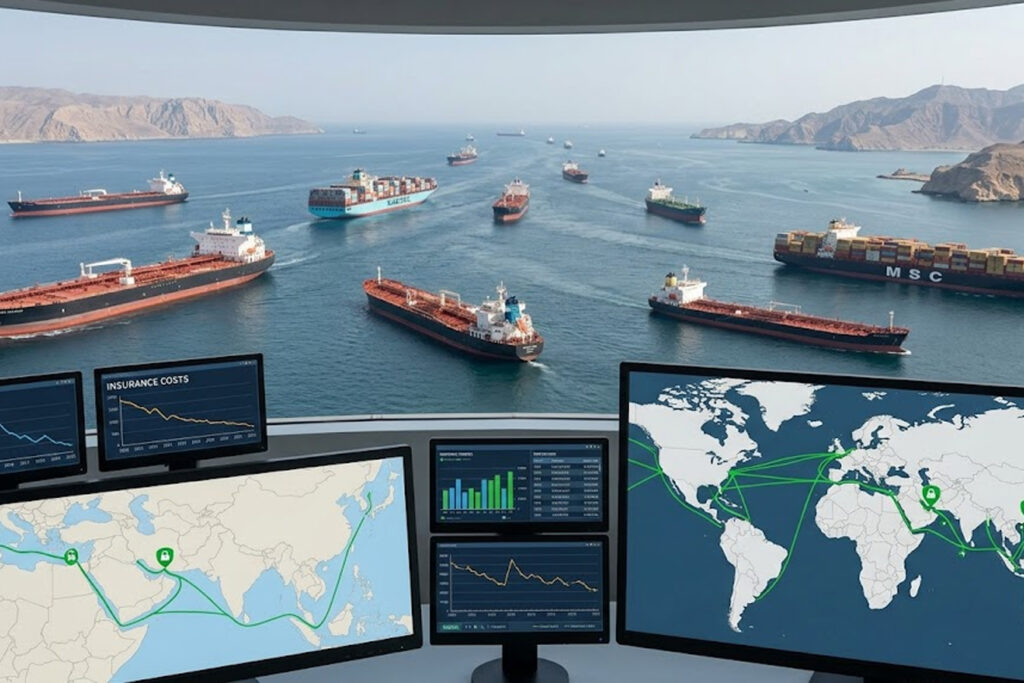
But as anyone who has followed the unfolding crisis knows, the ceasefire is fragile, conditional, and surrounded by uncertainty. The Strait of Hormuz, the world’s most critical maritime chokepoint through which approximately one-fifth of all globally traded oil and gas passes, remains a complex and contested environment. Approximately 2,000 vessels carrying goods and energy worth hundreds of billions of dollars remain stranded in the Persian Gulf. Oil prices, while falling sharply on the ceasefire announcement, remain dramatically elevated above pre-conflict levels. And shipping insurers and major carriers are advising caution before resuming normal operations.
For businesses that depend on international shipping through the Middle East corridor, the ceasefire is not a signal that the crisis is over. It is the beginning of a long and uncertain recovery process that will require careful navigation, professional logistics management, and realistic expectations about how quickly normal trade flows can resume.
At LTB Shipping, we have been monitoring this situation continuously since the conflict began and providing our clients with the guidance needed to manage their supply chains through one of the most significant maritime disruptions in modern history. This blog provides a comprehensive assessment of where things stand today, what the ceasefire means in practical terms for global shipping and trade routes, and what businesses should be thinking about as they plan their logistics operations in the weeks and months ahead.
1. How the Crisis Unfolded: From Conflict to Ceasefire
1.1 The Origins and Escalation of the Conflict
The conflict that triggered the current global shipping crisis had its roots in years of escalating tensions between the United States, Israel, and Iran over nuclear negotiations, regional proxy conflicts, and strategic competition for influence across the Middle East. Tensions escalated in the lead-up to 2026, stemming from failed nuclear negotiations in Geneva and a prior twelve-day air conflict in 2025. Wikipedia
On February 28, 2026, the United States and Israel initiated coordinated airstrikes on Iran under Operation Epic Fury, targeting military facilities, nuclear sites, and leadership. Wikipedia Iran responded with missile and drone attacks on US military bases, Israeli territory, and Gulf states, while its Islamic Revolutionary Guard Corps issued warnings prohibiting vessel passage through the Strait of Hormuz, triggering an effective halt to shipping traffic through one of the world’s most critical trade corridors.
The consequences for global shipping were immediate and severe. By March 19, Dubai crude oil prices reached their highest level on record. Wikipedia There have been 21 confirmed attacks on international shipping in the region with 10 seafarer fatalities and several seafarers injured, according to the IMO. UN News
1.2 The Ceasefire Announcement
A two-week ceasefire between the United States and Iran has halted approximately 40 days of US-Israeli attacks on Iran that had pushed the region to the brink of a wider war. The truce, brokered by Pakistan, follows fierce exchanges of air strikes, missile attacks, and threats that saw unprecedented strikes on Gulf nations, disrupted global shipping routes, and heightened fears of a prolonged confrontation. Al Jazeera
Under the terms of the ceasefire, the United States agreed to halt its military strikes on Iran for an initial two-week period, with Iran agreeing to the reopening of the Strait of Hormuz to shipping traffic. Al Jazeera The announcement sent financial markets surging with immediate relief, as the prospect of restored energy flows and reduced geopolitical risk drove a sharp initial repricing across oil, freight, and equity markets simultaneously.
However, the details of the ceasefire terms reveal a situation that is considerably more complex and uncertain than the headline announcement suggests.
2. The Current State of the Strait of Hormuz
2.1 What the Ceasefire Actually Means for the Strait
The Strait of Hormuz is the most strategically important maritime chokepoint in the world for global energy trade. Its two unidirectional sea lanes facilitate the transit of around 20 million barrels of oil per day, representing roughly 20% of global seaborne oil trade, primarily from producers like Saudi Arabia, the United Arab Emirates, Iraq, and Qatar. Wikipedia
Despite the ceasefire announcement, the practical situation at the strait remains far from normalized. Iran’s navy told ships anchored near the strait that they still must receive permission from Iranian naval forces for passing through the strait, warning vessels that if they attempted to transit the waterway without permission, they would face serious consequences. CBS News
Adding to the operational complexity, Iran announced alternative routes for ships traveling through the Strait of Hormuz, citing the risk of sea mines in the main zone of the vital waterway. CBS News The presence of naval mines in the primary shipping lanes represents an ongoing physical hazard that will require demining operations before normal traffic patterns can safely resume, regardless of the political status of the ceasefire.
2.2 The 2,000 Stranded Vessels
One of the most urgent and commercially significant dimensions of the current situation is the enormous backlog of vessels trapped in the Persian Gulf. The IMO has estimated that there are approximately 2,000 ships including oil and gas tankers, bulk carriers, cargo ships, and six tourist cruise liners stranded in the Persian Gulf, unable to pass through the strait. Around 20,000 seafarers are thought to be currently aboard those vessels. UN News
The process of safely evacuating and routing these stranded vessels out of the Persian Gulf will itself be a significant logistical operation that will take weeks to complete even under the most favorable conditions. Priority will inevitably be given to vessels carrying the most time-sensitive or economically critical cargo, meaning that the backlog clearance process will proceed unevenly across different vessel and cargo types.
The IMO Secretary-General stated that the priority is to ensure an evacuation that guarantees the safety of navigation, with shipping expected to resume through long-established routes via the Traffic Separation Scheme through the Strait of Hormuz. UN News
2.3 Early Transit Activity
The very first signals of post-ceasefire transit activity have been cautious and limited. Ship-tracking data showed that two vessels had transited the Strait of Hormuz since the ceasefire was announced, one of them Greek-owned and the other flying a Liberian flag. They were bulk cargo vessels, not oil tankers. CBS News
The absence of oil tankers from the initial transit activity is significant. It reflects the elevated caution of tanker owners and operators who face the highest financial exposure from any resumption of hostilities and who are waiting for clearer evidence of genuine ceasefire stability before committing multi-hundred-million-dollar vessels to what remains a contested and potentially mined waterway.
3. Oil Price Movements and Their Freight Implications
3.1 The Price Trajectory Through the Crisis
The oil price story of the past forty days has been one of the most dramatic in modern energy market history, with direct consequences for freight costs across all transport modes that have affected businesses worldwide.
Dubai crude oil prices reached their highest level on record at $166 per barrel on March 19, compared to approximately $72 per barrel immediately before the conflict began. Wikipedia This more than doubling of crude prices in less than three weeks generated enormous fuel surcharges across ocean shipping, air freight, and road transport simultaneously, adding hundreds of dollars per container to freight costs on affected trade lanes and creating severe disruption to freight budgets that had been set based on stable pre-conflict energy assumptions.
3.2 The Post-Ceasefire Price Response
Oil prices fell by double-digit margins following the ceasefire announcement, with the US-based West Texas Intermediate benchmark down approximately 14% and the international Brent Crude benchmark down approximately 13%. CBS News
However, the relief provided by the ceasefire announcement should not be mistaken for a return to pre-conflict pricing. Prices remain significantly elevated from pre-war levels, with West Texas Intermediate trading around $67 a barrel the day before the war began, compared to approximately $97 per barrel following the post-ceasefire price drop. CBS News This means that even after the dramatic post-ceasefire price fall, crude oil remains roughly 45 percent above pre-conflict levels, and the fuel surcharges embedded in freight rates across all transport modes will remain substantially elevated until prices normalize further.
3.3 The Slow Road Back to Pre-War Energy Production
One of the most important factors determining how quickly oil prices can return to pre-conflict levels is the pace of recovery in regional energy production and export capacity. The picture here is sobering for anyone hoping for a rapid normalization.
Persian Gulf oil producers, lacking export routes during the conflict, cut output by millions of barrels per day. Restarting production and multiple oil and refining sites that were damaged during the war will take time, with predictions of three to six months to fully reach pre-war levels of regional production and refining. Axios
The natural gas picture is even more challenging. Damage to liquefied natural gas exporting infrastructure in Qatar may take years to fully repair. Axios Qatar is one of the world’s largest LNG exporters, and the extended disruption to its export capacity will maintain elevated gas prices and related freight premiums on LNG trade lanes for an extended period that extends well beyond the current two-week ceasefire window.
4. The Shipping Industry Response to the Ceasefire
4.1 Major Carriers Urge Caution
The response of major shipping lines and industry bodies to the ceasefire announcement has been consistent in urging caution and emphasizing that a ceasefire announcement alone is not sufficient to restore normal shipping operations through the affected region.
Shipping giant A.P. Moller-Maersk stated that the ceasefire may create transit opportunities, but does not yet provide full maritime certainty, and that they need to understand all potential conditions attached. Axios
This cautious stance from the world’s leading container carrier reflects the practical challenges that stand between a ceasefire announcement and the resumption of normal commercial operations. Insurance coverage must be reestablished. The terms and conditions under which Iran will permit vessel transit must be clarified. The mine threat in the primary shipping lane must be assessed and addressed. And the broader political and military situation must demonstrate sufficient stability to justify the risk and insurance cost of returning vessels to the area.
4.2 Insurance Market Conditions
The insurance market, which is perhaps the most sensitive financial barometer of actual maritime risk, has responded to the ceasefire with cautious optimism rather than immediate normalization. Lloyd’s Market Association Head of Marine and Aviation Neil Roberts stated that it is highly unlikely that trade into the Gulf will simply resume, as the region remains at heightened risk with none of the underlying tensions resolved. NBC News
Insurance for the tankers will need to be reestablished, requiring figuring out the specific conditions Iran may impose, which remain unclear. Confidence-building measures in coming days are going to be key to restoring shipments. Axios
War risk insurance premiums, which had increased by multiple hundreds of percent during the conflict, will only return to normal levels gradually as the ceasefire proves durable and the specific risk profile of Strait of Hormuz transit becomes clearer. Until that process is substantially complete, the additional insurance cost will remain a significant component of the freight cost premium on Middle East corridor shipments.
4.3 Crew and Seafarer Safety Considerations
Beyond the commercial and insurance dimensions of the situation, the safety and welfare of the approximately 20,000 seafarers currently aboard stranded vessels in the Persian Gulf is an urgent human dimension of the crisis that the shipping industry is prioritizing.
The IMO Secretary-General stated that the ceasefire is welcome news for the 20,000 seafarers who are awaiting evacuation on the ships which remain in the Persian Gulf, noting that they have spent more than one month in a tense and volatile situation, unable to leave their ships. UN News
The process of safely rotating crews on stranded vessels, many of whom have been aboard for far longer than their contracted periods due to the crisis, will itself require significant logistical coordination and will be a priority consideration in how the backlog clearance process is sequenced.
5. Impact on Specific Trade Lanes and Commodity Flows
5.1 Gulf Region Oil and Gas Exports
The most directly impacted trade flows are the oil and gas exports from the Persian Gulf that have been completely or severely disrupted since the conflict began. Saudi Arabia, the UAE, Iraq, and Kuwait are among the world’s largest oil exporters, and all rely on the Strait of Hormuz as their primary export route. The interruption of these export flows removed millions of barrels per day from global markets, driving the oil price surge that peaked in mid-March.
The resumption of these flows, even partially and cautiously in the near term, is the single most consequential development for global energy markets and the transport cost structures that depend on them. However, as noted above, even after the strait reopens to normal traffic, the production and refining capacity that was shut down or damaged during the conflict will take months to fully restore, meaning that export volumes will recover gradually rather than immediately.
5.2 Container Shipping Through the Region
While energy trade has dominated headlines, container shipping through the Middle East corridor has also been severely affected. The Gulf states are major importers of consumer goods, industrial equipment, and food products, and the disruption to inbound container services has created significant supply shortages within the region. At the same time, Gulf state manufacturers and re-exporters have been unable to move finished goods outbound, creating operational and financial pressure across a range of sectors.
The process of restoring container services to Gulf ports will require carriers to assess berth availability, port operational readiness, and congestion conditions at ports that have been operating at reduced capacity or in disrupted conditions for over a month. The backlog of cargo awaiting movement in both directions will create initial congestion conditions as services resume, similar to the post-COVID recovery dynamics experienced in 2021.
5.3 Petrochemicals, Fertilizers, and Agricultural Trade
Beyond crude oil and gas, the Persian Gulf is a major global hub for petrochemical production and for the fertilizer exports that underpin global agricultural supply chains. The Persian Gulf is a major hub for global fertilizer production and exports. Wikipedia The disruption to these flows has cascading effects on agricultural production costs worldwide, particularly in import-dependent developing nations where fertilizer availability and affordability directly affects food security.
The restoration of petrochemical and fertilizer trade flows will follow a similar trajectory to energy exports, with production facilities that were shut down or damaged requiring inspection, restart procedures, and in some cases repair before export volumes can recover to normal levels.
5.4 The Bab el-Mandeb and Red Sea Dimension
The Strait of Hormuz was not the only critical maritime chokepoint affected by the conflict. The Bab el-Mandeb Strait, the southern gateway from the Red Sea to the Arabian Sea, was also threatened during the conflict by Iranian-aligned Houthi forces in Yemen. If both the Strait of Hormuz and the Bab el-Mandeb were shut simultaneously, a quarter of the world’s energy supply would be blocked. Al Jazeera
The ceasefire between the US and Iran has led to pro-Iran armed factions in Iraq declaring a parallel halt to their regional operations, providing some de-escalation pressure on the Bab el-Mandeb situation. However, the Houthi position on the ceasefire and its implications for Red Sea shipping remains an important variable to monitor in the coming days and weeks.
6. The Critical Uncertainty: Will the Ceasefire Hold?
6.1 The Fragility of the Current Arrangement
Every assessment of the current ceasefire from credible observers emphasizes its fragility and conditionality. US Vice President JD Vance described the truce as fragile as some attacks continued in the region. Council on Foreign Relations
The ceasefire covers a two-week period within which US-Iran negotiations are expected to make progress toward a more durable agreement. Pakistan invited the United States and Iran to begin formal negotiations in Islamabad to work toward a longer-term resolution. Al Jazeera Whether those negotiations can produce a lasting settlement depends on resolving fundamental disagreements on nuclear policy, regional influence, and US military presence in the Gulf that have been unresolved for decades.
6.2 The Lebanon Complication
A significant complicating factor in the current ceasefire is the ongoing Israeli military campaign against Hezbollah in Lebanon, which Israel and the United States have both stated is not covered by the Iran-US ceasefire. Iran-aligned forces have warned that continued Israeli strikes in Lebanon could trigger a resumption of regional hostilities that would once again threaten maritime operations in the Gulf.
Iran’s IRGC warned that if aggression against Lebanon is not halted, it will act upon its duty and deliver a regret-inducing response to aggressors in the region. CNN For shipping operators assessing whether to resume transit through the Strait of Hormuz, these warnings represent a real and current risk factor that must be weighed alongside the formal ceasefire terms.
6.3 What a Ceasefire Breakdown Would Mean for Shipping
For businesses planning their logistics operations around an assumption of ceasefire durability, the consequences of a breakdown scenario must be clearly understood. A resumption of hostilities would likely trigger an immediate re-closure of the Strait of Hormuz, a rapid reversal of the post-ceasefire oil price decline back toward or above the conflict-era highs, a re-imposition of war risk insurance restrictions that would again make commercial operations through the region impossible, and the stranding of any vessels that had returned to the Persian Gulf during the ceasefire period.
This worst-case scenario is not the most likely outcome of the current situation, but its possibility cannot be dismissed, and businesses making logistics decisions based purely on the ceasefire announcement without contingency planning for its potential breakdown are accepting risk they may not have fully assessed.
7. Alternative Routes and Their Long-Term Implications
7.1 The Cape of Good Hope Route During the Conflict
For container shipping lines that had been routing cargo between Asia and Europe through the Suez Canal, the combination of the ongoing Red Sea disruptions from Houthi activity and the direct Strait of Hormuz closure during the conflict made the Cape of Good Hope diversion not just a preference but a practical necessity. This routing adds approximately 10 to 14 additional sailing days to Asia-Europe voyages and generates significant additional fuel consumption per voyage.
During the conflict, the Cape route became the default for most major shipping alliances on Asia-Europe services, driving significant increases in freight rates as effective capacity was reduced by the extended transit times. The normalization of rates on this lane will depend on how quickly carriers can bring vessels back to the more direct Suez routing and how the backlog of cargo accumulated during the disruption period is absorbed.
7.2 The Panama Canal as a Beneficiary
With the Middle East corridor severely disrupted, the Panama Canal saw increased utilization as an alternative routing option for certain trade flows. The crisis led to a slight increase in the number of ships traversing the Panama Canal. Wikipedia While the Panama Canal serves a different routing purpose than the Suez and Hormuz corridors, the crisis demonstrated the value of routing diversification in supply chain resilience planning.
7.3 Whether Trade Flow Changes Will Be Permanent
One of the most significant long-term questions raised by the current crisis is whether the disruption will accelerate already-emerging trends toward supply chain restructuring and sourcing diversification away from Middle East dependencies. Businesses that were already considering nearshoring strategies or alternative supplier bases outside the Persian Gulf region will have had their strategic rationale reinforced by the experience of the past forty days.
For energy markets in particular, the crisis has already triggered emergency responses including the release of 400 million barrels of oil from IEA emergency reserves Wikipedia and adjustments to shipping routes that may have lasting effects on established trade flow patterns even after the immediate crisis is resolved.
8. What Businesses Should Do Right Now
8.1 Do Not Assume Immediate Normalization
The most important practical guidance for businesses managing international supply chains through the affected region is to avoid assuming that the ceasefire announcement translates immediately into restored normal shipping operations. The evidence from both the shipping industry response and the on-the-ground situation at the Strait of Hormuz strongly suggests that a gradual, cautious, and potentially uneven recovery process lies ahead rather than a rapid return to pre-conflict conditions.
Building planning assumptions around a two to three month normalization timeline for shipping operations, with energy costs remaining elevated throughout that period, is a more prudent basis for supply chain planning than assuming that the ceasefire delivers immediate operational normality.
8.2 Review Insurance Coverage Immediately
War risk insurance coverage that was adjusted or withdrawn during the conflict period will need to be reviewed and updated as the situation evolves. Working with insurance specialists and freight forwarders to ensure that appropriate coverage is in place for any planned movements through the region is essential before resuming shipments on affected lanes.
8.3 Maintain Alternative Routing Options
The crisis has demonstrated once again the critical importance of maintaining pre-qualified alternative routing options for supply chains with exposure to geopolitically sensitive corridors. Businesses that had already diversified their routing options were better positioned to adapt during the conflict than those that depended entirely on the Middle East corridor.
Maintaining those alternative routing capabilities as the situation normalizes, rather than reverting entirely to the most direct routes as soon as they reopen, provides ongoing resilience against the possibility of ceasefire breakdown or future disruption events.
8.4 Plan for the Backlog Recovery Phase
The approximately 2,000 vessels stranded in the Persian Gulf represent a significant backlog that will create surge conditions as the strait reopens and these vessels begin moving simultaneously. Port congestion, equipment shortages, and rate volatility should all be anticipated as part of the backlog recovery phase, and logistics planning should incorporate realistic timelines and contingency buffers rather than assuming smooth and immediate flow resumption.
8.5 Reassess Inventory Positions for Critical Goods
For businesses that import goods from Gulf region suppliers or that depend on energy-intensive production processes, reviewing current inventory positions and safety stock levels for critical items is a prudent step in light of the ongoing uncertainty around how quickly supply flows will fully normalize.
9. LTB Shipping: Navigating the Crisis and the Recovery
At LTB Shipping, we have maintained continuous monitoring of the Iran-US conflict and its impact on global shipping since hostilities began on February 28. Our team has been working closely with clients to reroute shipments, manage documentation through rapidly changing compliance environments, and identify capacity solutions on alternative corridors that have kept cargo moving despite the severe disruption to primary routes.
As the ceasefire opens a cautious path toward recovery, we are positioned to support our clients through every stage of the normalization process with the market intelligence, carrier relationships, and operational expertise the situation demands.
- Continuous real-time monitoring of Strait of Hormuz transit conditions and ceasefire developments with immediate client communication as the situation evolves
- Active engagement with carrier partners on the resumption timeline for Persian Gulf services and priority capacity allocation for LTB clients
- Insurance advisory support to ensure appropriate war risk coverage is in place before any cargo movements resume on affected lanes
- Alternative routing management including Cape of Good Hope, Suez via Red Sea assessment, and multimodal options for time-sensitive cargo
- Demurrage and detention management for cargo that has been stranded at Gulf ports during the disruption period
- Customs compliance support across the rapidly evolving sanctions and regulatory landscape affecting Middle East trade
- Supply chain contingency planning support helping clients build the resilience to manage both the current recovery phase and future disruption scenarios
- Freight cost advisory helping clients understand and plan for the extended period of elevated energy costs that the market is pricing in even post-ceasefire
Our commitment to our clients is to provide clear, accurate, and timely guidance based on what is actually happening in the market rather than optimistic assumptions that could leave their supply chains exposed.
Conclusion
The Iran-US ceasefire announced on April 8, 2026 is genuinely significant news for global shipping and trade routes. After forty days of conflict that closed the world’s most important oil and gas shipping corridor, disrupted container services across the Middle East, and generated the most severe maritime insurance and freight cost crisis in years, the prospect of a negotiated path toward peace and the gradual reopening of the Strait of Hormuz is welcome relief for the entire global logistics industry.
But the road from ceasefire announcement to restored normal shipping operations is long, uncertain, and fraught with the risk of reversal. The mines in the shipping lanes must be cleared. War risk insurance must be reestablished. The 2,000 stranded vessels must be safely evacuated. Oil production and refining capacity damaged during the conflict must be rebuilt over months. And the two-week ceasefire window must produce the foundations of a durable political agreement that gives shipping operators genuine confidence that the Strait of Hormuz will remain open for the long term.
For businesses managing supply chains with exposure to this corridor, the next several weeks and months demand exactly the combination of informed monitoring, contingency preparedness, and professional logistics management that has defined the best-managed supply chains throughout this crisis. The ceasefire is not the end of the story. It is the beginning of a complex recovery that requires continued vigilance and expert navigation.
Is your supply chain exposed to the ongoing disruption in Middle East shipping routes? Contact LTB Shipping today and speak with our freight specialists about how we can help you navigate the recovery phase, manage your cargo through the returning lanes, and build the supply chain resilience your business needs for whatever comes next.