
Recent Posts




How to Optimize Your Supply Chain Through Strategic Terminal & Warehouse Use | Warehouse Logistics Optimization
December 28, 2025
Introduction
You arrive at your warehouse early in the morning and see inbound containers waiting in the yard. Pickers are searching for SKUs, shipments are delayed, and next-day delivery promises are at risk. If this sounds familiar, it is time to focus on warehouse logistics optimization.
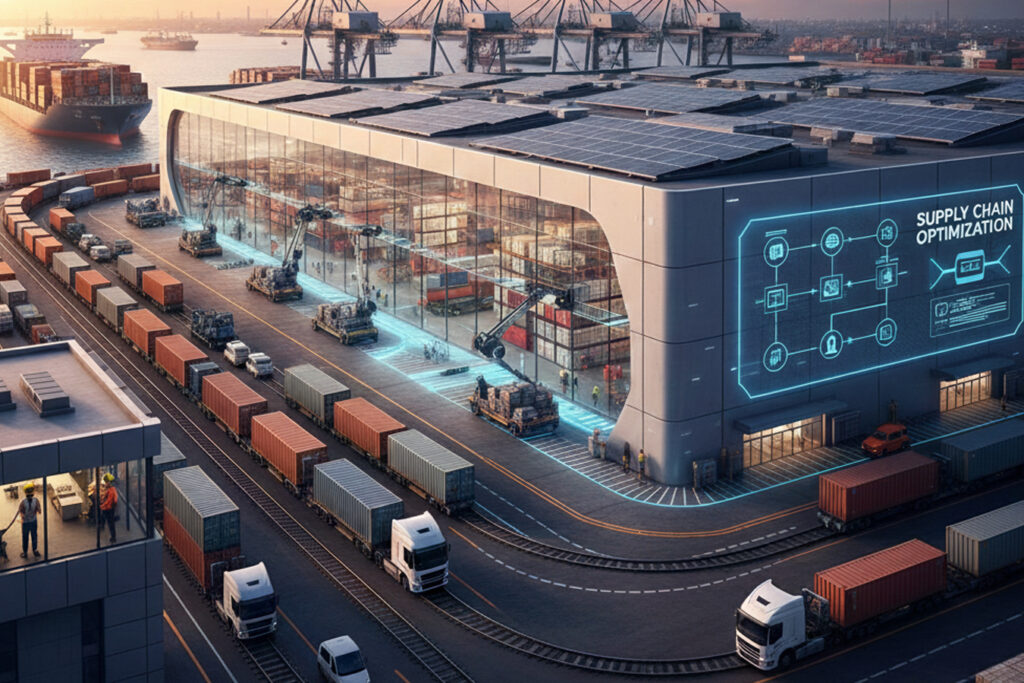
But optimization is not only about improving warehouse operations inside four walls. It is about using terminals, warehouses, and transfer points as connected parts of one supply chain system. When planned strategically, these assets reduce cost, improve speed, and increase reliability.
In this blog, we explain how terminals and warehouses can work together to improve supply chain performance. You will also find practical best practices and a clear framework you can apply immediately.
Why Strategic Terminal and Warehouse Use Matters
Warehouses and terminals should not be treated as storage points only. When used correctly, they become active control points in the supply chain.
Key Benefits
Reduced lead times
Placing inventory closer to demand shortens transportation time and improves delivery speed.Lower operating costs
Fewer long-haul moves, better load planning, and reduced empty returns lower the cost per unit.Improved reliability
Strategic buffer points help absorb demand fluctuations and unexpected disruptions.Scalability and flexibility
Well-positioned warehouses and terminals allow easy expansion into new markets and channels.
Many companies still treat warehouses as static storage locations. This approach limits performance and increases cost. Strategic use turns them into competitive advantages.
Terminal vs Warehouse: Understanding the Difference
What Is a Terminal?
A terminal is a location focused on movement rather than storage. Examples include container yards, rail terminals, inland ports, and port terminals.
Terminal functions include:
Consolidating shipments
Transferring containers between transport modes
Inspecting and staging cargo
Reducing congestion near ports
Using inland terminals can reduce delays and minimize risks caused by port congestion.
What Is a Warehouse?
A warehouse is where inventory is stored, and value-added activities take place.
Warehouse functions include:
Storage and inventory management
Order picking and packing
Kitting and light assembly
Returns and reverse logistics
Strategic warehousing focuses on placing inventory close to customers and optimizing internal flow.
How Terminals and Warehouses Work Together
Function Terminal Role Warehouse Role Flow control, Transfer and staging, Storage and fulfillment Location Near ports or rail, Near customers, Focus: Speed and throughput, Accuracy and efficiency, Value addition, Scanning and batching, Packing and returns
When terminals and warehouses are connected properly, hand-offs become faster and smoother.
Best Practices for Warehouse Logistics Optimization
1. Layout and Zone Design
Separate areas for receiving, storage, picking, packing, and shipping.
Place fast-moving SKUs closer to dispatch zones.
Design terminal yards to allow straight flow from inbound to outbound.
Good layout design reduces travel time and increases productivity.
2. Reduce Handling and Touch Points
Every additional movement adds cost and risk.
Use cross-docking for fast-moving products.
Minimize repacking and rehandling.
Design flow-through processes where possible.
Fewer touches mean faster processing and fewer errors.
3. Use Technology and Data
Implement a Warehouse Management System for visibility.
Track dwell time, inventory turnover, and order accuracy.
Use analytics to identify bottlenecks.
Technology enables faster decision-making and continuous improvement.
4. Network Location and Inventory Strategy
Align warehouse locations with customer demand.
Use a hub-and-spoke model where appropriate.
Balance inventory levels to avoid overstocking and shortages.
Warehouses should act as dynamic inventory buffers, not long-term storage.
5. Workforce Training and Culture
Train staff across terminal and warehouse operations.
Encourage continuous improvement and data-driven thinking.
Focus on safety, ergonomics, and engagement.
Skilled and motivated teams improve overall efficiency.
6. Measure Performance Regularly
Track key metrics such as:
Dwell time
Order-to-ship cycle time
Space utilization
Labor productivity
Picking accuracy
Review results regularly and address root causes of delays.
Real Operational Example
A mid-sized FMCG company operated two warehouses and one port terminal. Containers stayed idle in the terminal yard for nearly two days before moving to storage.
Actions Taken
Containers were scanned and sorted immediately upon arrival.
Fast-moving items were sent directly to regional warehouses.
Warehouse layout was redesigned based on product velocity.
A basic WMS module was implemented.
Results After 6 Months
Terminal dwell time reduced by 30 percent
Picking speed improved by 25 percent
Emergency replenishment reduced by 40 percent
This proved that warehouse logistics optimization works best when terminals and warehouses are planned together.
Strategic Warehouse Logistics Optimization Checklist
Use this checklist to evaluate your network:
Have you mapped container flow from the terminal to the warehouse to the dispatch?
Are locations aligned with suppliers and customers?
Is warehouse layout based on product velocity?
Are terminal and warehouse roles clearly separated?
Do you track key performance metrics?
Is technology used for visibility and control?
Is your workforce trained for flexibility?
Do you review layout and slotting regularly?
Are bottlenecks identified and addressed?
Can your network scale during peak demand?
Conclusion
Warehouse logistics optimization is no longer optional. Companies that use terminals and warehouses strategically gain faster fulfillment, lower costs, and higher customer satisfaction.
Success comes from viewing terminals and warehouses as connected assets, not isolated facilities. When designed, measured, and managed as one system, they become powerful drivers of supply chain performance.
Call to Action
Have you reviewed your terminal and warehouse flows recently?
Share your biggest challenge, such as layout, dwell time, or picking speed.
Subscribe to our newsletter to receive a free warehouse and terminal optimization checklist tailored to your region.