
Recent Posts
Understanding ISO Tank Container Transport: Their Role in Global Liquid Logistics
December 12, 2025
Introduction
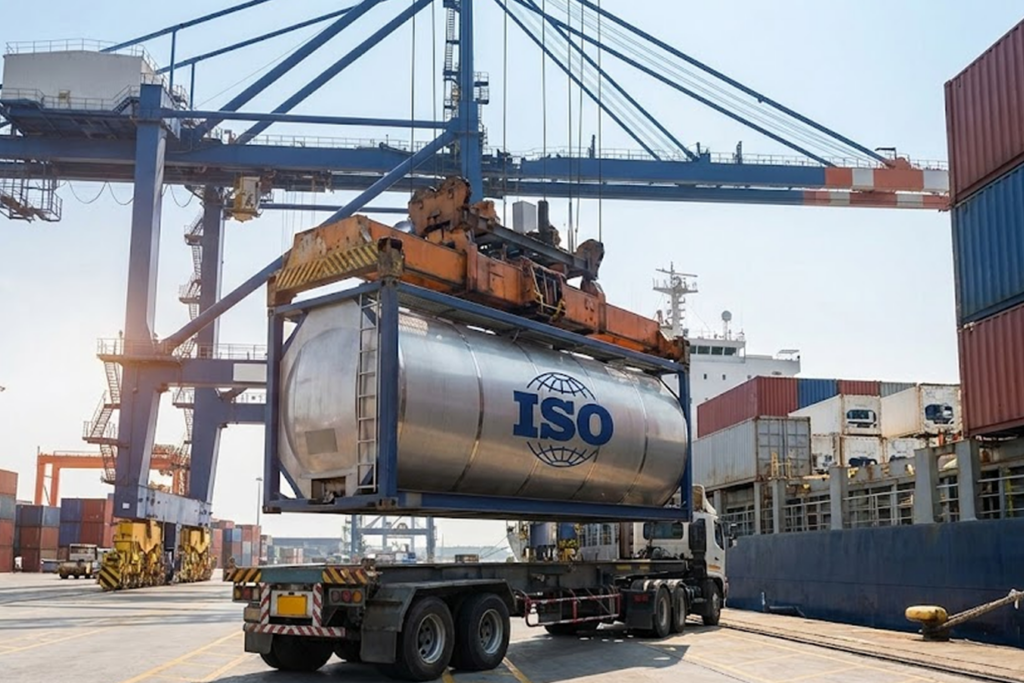
Imagine a large stainless steel tank secured inside a strong 20-foot frame, filled with thousands of liters of a chemical or food-grade liquid. This same tank can travel by road, rail, and sea without being emptied or transferred at any step. This is the power of ISO tank container transport.
ISO tanks play a major role in global liquid logistics because they offer safety, efficiency, and flexibility. In this article, we will explain how ISO tank containers work, why they are important, and what best practices companies should follow when using them.
What Is an ISO Tank Container?
An ISO tank container is a tank unit built according to international standards so it can be used across all transport modes. These standards allow tanks to move through ports, container terminals, rail yards, and road networks without special handling requirements.
Key Characteristics
A stainless steel tank is placed inside a protective steel frame.
Built to the size of a standard 20-foot container.
Suitable for a wide range of liquids, including chemicals, food products, and industrial fluids.
Designed for intermodal transport, meaning it can move by truck, rail, and sea without unloading.
How ISO Tanks Compare to Other Liquid Transport Methods
Mode: Typical Use Limitations: Drums or Barrels Small volumes High handling cost, higher contamination risk Flexi Tanks Food-grade or non-hazardous liquids Not suitable for all modes, often single-use ISO Tank Containers Bulk liquids, hazardous or non-hazardous Higher setup cost, requires proper facilities
ISO tanks are ideal when companies need bulk liquid movement, higher safety, and fewer transfers.
Why ISO Tank Container Transport Matters in Global Liquid Logistics
1. Intermodal Efficiency
ISO tanks move smoothly through all legs of the supply chain. The same tank can be lifted onto a vessel, loaded onto a rail wagon, or placed on a truck trailer without opening or repackaging the cargo.
2. Higher Safety and Product Integrity
The tanks are engineered to withstand pressure, weight, temperature changes, and movement during transport. This reduces the chance of leaks, spills, contamination, or product loss.
3. Lower Operational Costs
Since cargo stays in the same unit from origin to destination, companies avoid the cost of transferring liquids into different containers. Fewer handling steps reduce labor costs and save time.
4. Ideal for Hazardous and High-Value Liquids
ISO tanks offer features required for regulated cargo, such as chemicals. Many food-grade liquids also require a clean, sealed, and traceable environment that ISO tanks provide.
Real Example
A chemical manufacturer shifted from drums to ISO tanks for shipments from South Asia to Europe. This change reduced handling time, improved delivery predictability, and significantly lowered contamination risks.
Design, Standards, and Best Practices
Standards and Certifications
Several international standards ensure ISO tanks are safe and suitable for global transport. These standards control dimensions, strength, stacking capability, pressure tolerances, and lifting requirements.
Key standard categories include:
Structural strength
Pressure and leak testing
Lifting and stacking tests
Tank-to-frame integrity
These tests ensure ISO tanks can withstand real conditions during road, rail, and ocean movement.
Design Features to Know
1. Frame and Corner Fittings
The outer frame is built to fit into container-handling equipment. This frame protects the tank and allows cranes and forklifts to lift it safely.
2. Stainless Steel Tank Vessel
The tank is usually stainless steel, sometimes insulated or equipped with heating systems. Valves, manholes, and bottom outlets help with loading and unloading.
3. Identification and Markings
Each tank has a unique identification code so carriers and logistics systems can track it globally.
Operational Best Practices for ISO Tank Transport
1. Pre-Use Inspection
Always check:
Certification and test validity
Tank and frame condition
Tightness of valves and seals
Cleanliness (especially for food-grade products)
2. Cargo Compatibility
Make sure the chemical or liquid matches the tank material and any lining inside. Check pressure ratings and temperature needs.
3. Proper Filling Procedures
Overfilling or under-filling can cause problems due to liquid movement inside the tank. Follow recommended fill levels.
4. Securing and Handling
Every transport leg requires proper securing. Twist locks, chassis fit, and stability must be checked.
5. Monitoring During Transport
Temperature, pressure, and routing should be monitored if needed, especially during long sea voyages.
6. Cleaning and Turnaround
After use, tanks must be cleaned according to cargo type. Switching from chemicals to food-grade requires deep cleaning and certification.
Benefits, Challenges, and Strategic Factors
Benefits
Single unit from start to finish reduces handling.
Intermodal movement lowers transfer risk.
Strong safety record and predictable performance.
Easier planning due to standardization.
Better asset utilization for high-volume shippers.
Challenges
Higher initial cost compared to drums or flexi tanks.
Requires proper loading and unloading facilities.
Empty repositioning can add cost.
Cleaning costs vary depending on product.
Regulatory requirements add complexity for hazardous liquids.
Strategic Considerations for Logistics Teams
1. Volume and Frequency
ISO tanks work best when shipments are regular and in high volume.
2. Route and Mode Selection
Using sea or rail amplifies the benefits of ISO tanks. Pure trucking does not unlock their full potential.
3. Return Logistics
Plan how the empty tank will be returned or reused to avoid unnecessary cost.
4. Provider Selection
Choose partners with reliable maintenance, certification tracking, and depot coverage.
5. Sustainability
ISO tanks reduce packaging waste and support companies with “green logistics” goals.
Decision Framework
Use this checklist when deciding whether ISO tank transport is right for your shipment:
What type of liquid is being transported?
What is the required route? (road only or intermodal)
What is the shipment volume?
Is cost or speed the priority?
Are proper facilities available at the origin and destination?
How will the empty tank be returned?
Does the provider meet required maintenance and certification standards?
Conclusion
ISO tank container transport plays a vital role in the modern movement of chemicals and liquids. When matched with the right cargo, route, and processes, these tanks provide a safer, faster, and more cost-effective solution than many traditional methods.
The key to success is aligning cargo type, infrastructure readiness, volume, and return planning. When these factors come together, ISO tank transport can transform a supply chain from slow and complex to efficient and predictable.
Call to Action
If you want help evaluating whether ISO tank container transport is the right choice for your next liquid shipment, share your route and cargo details. I will gladly guide you through the best options for your logistics need