Recent Posts
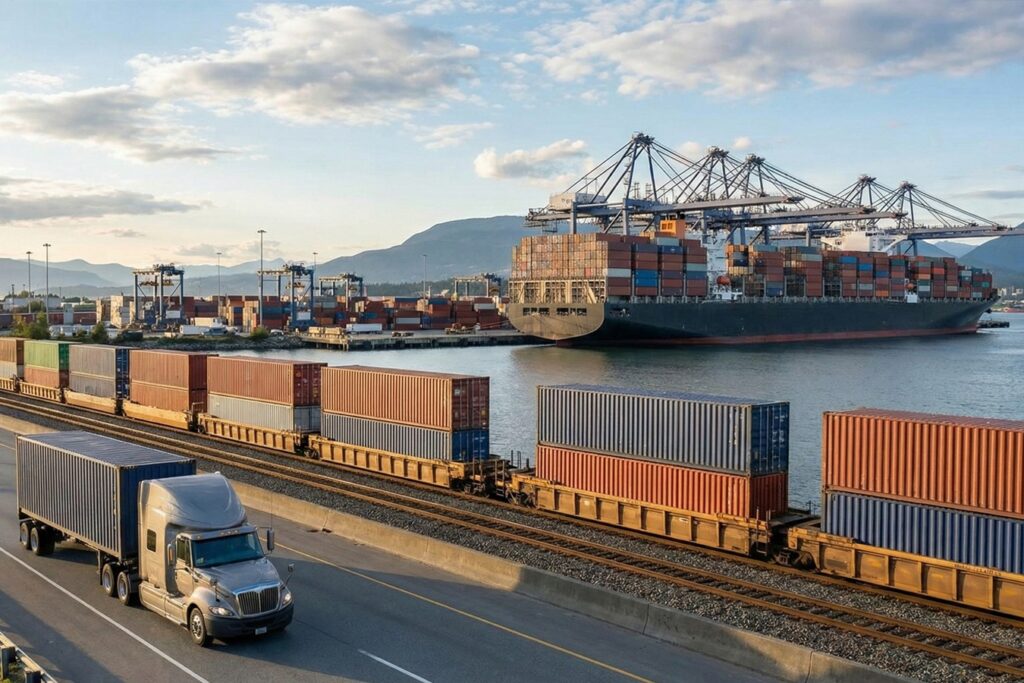
Truck vs Rail vs Sea for Container Shipments
December 9, 2025
Introduction
Imagine you’re standing inside a factory in inland Pakistan. A full 40-foot container is sealed, ready to move toward a customer in Africa or Europe. But here’s the challenge: which transport mode gets it there best—truck, rail, or sea?
In modern container shipping logistics, choosing the wrong mode can mean higher costs, slower delivery, unnecessary risks, and unhappy clients.
This updated guide breaks down each mode clearly, compares real-world factors, and ends with a practical decision framework so you can choose wisely every time.
1. Truck Transport
What Trucks Do Best
-
Ultimate flexibility: Trucks handle true door-to-door movement. In many regions (South Asia, Africa), trucking is often the only realistic way to cover the first and last mile.
-
Fast for short and medium distances: If the delivery is within a few hundred kilometres, trucks usually offer the fastest turnaround time.
-
Easier coordination: No need for terminals, train schedules, or port slots. You book, track, and move.
Trade-Offs
-
Higher cost over long distances: Per-km cost rises fast on long routes.
-
Less predictable: Road congestion, seasonal weather, driver shortage, checkpoints, tolls, and poor road conditions cause delays.
-
Higher emissions: Trucks generally have a larger environmental footprint compared to rail or sea.
Choose Truck If:
-
Distance is short to medium (under ~500 km)
-
Delivery is urgent
-
Rail or sea access is limited
-
You’re moving small or irregular volumes
2. Rail Transport
What Rail Does Best
-
Lower cost for long-distance inland moves: Rail often beats trucking on cost when moving containers across hundreds of kilometres.
-
Energy efficient: Rail emits significantly less CO₂ per ton-mile than trucks.
-
Ideal for bulk volumes: Moving many containers at once? Rail wins in stability and capacity.
Trade-Offs
-
Limited reach: Rail doesn’t do door-to-door. You still need trucks at origin or destination.
-
Infrastructure dependent: Terminals, loading equipment, schedules, and rail availability must align.
-
Potential delay: Slot shortages, terminal congestion and interchange delays can slow shipments.
Choose Rail If:
-
Both ends of your route have usable rail infrastructure
-
Volume is high and stable
-
Cost savings matter more than speed
-
Sustainability or green logistics is a priority
3. Sea / Ocean Freight
What Sea Freight Does Best
-
Best for international movement: Sea is the backbone of global trade.
-
Lowest cost per container: Massive ships make long-distance moves affordable.
-
Good sustainability balance: Per-ton-mile emissions are lower than trucking.
Trade-Offs
-
Slowest transit time: If speed is critical, sea might not meet expectations.
-
Port uncertainties: Congestion, re-routing, transshipment delays, and documentation issues add risk.
-
Added inland steps: Once the container arrives at port, a truck or rail move is still needed.
Choose Sea If:
-
You are shipping across continents
-
Cost efficiency is a top priority
-
Delivery deadlines are flexible
-
Ports and inland logistics are reliable
4. Updated Comparison Table
FactorTruckRailSeaBest DistanceShort to mediumMedium to longLong / internationalCostHighest for long routesMedium-lowLowest per TEUSpeedFastest inlandModerateSlowestFlexibilityHighest (door-to-door)MediumLowestInfrastructureRoads onlyTerminals + tracksPorts + vesselsSustainabilityHigh emissionsLower emissionsLow per-ton-mileBest Use CaseUrgent / short routesLong inland movesGlobal trade
5. Real-World Insights That Actually Matter
A. It’s almost never one mode
The best shipping strategies use intermodal combinations:
-
Sea + Rail + Truck
-
Sea + Truck
-
Rail + Truck
This gives a flexible balance of cost, reliability, and reach.
B. Infrastructure beats theory every time
On paper, rail may be cheaper.
In reality, if terminals are congested or equipment is lacking, trucking—even at a higher cost—may still deliver faster and more reliably.
C. Global events can change optimal choices
Route closures, fuel prices, seasonal congestion, political events, and weather disruptions can shift cost vs time trade-offs overnight.
D. Sustainability is becoming a decision driver
More companies now prefer lower-emission rail or sea options to meet corporate sustainability goals.
E. Volume dictates mode
-
Small, irregular volumes → trucking
-
Consistent large volumes → rail or sea
F. Hidden costs are everywhere
These often change the “cheapest” mode:
-
Truck: tolls, idle time, border delays
-
Rail: terminal fees, handling charges
-
Sea: demurrage, detention, transshipment fees
Smart logistics teams always calculate total landed cost, not just freight rate.
6. Decision Framework: How to Choose Your Mode
Step 1 — Define Your Priority
-
Speed?
-
Cost?
-
Sustainability?
-
Route flexibility?
Step 2 — Identify Shipment Details
-
Volume (FCL or multiple containers?)
-
Container weight & sensitivity
-
Frequency (one-off or regular?)
Step 3 — Map the Infrastructure
-
Is there a port nearby?
-
Are rail terminals accessible?
-
Road quality? Any bottlenecks?
Step 4 — Compare Time & Cost
Get realistic quotes for:
-
Truck only
-
Rail + Truck
-
Sea + Truck
Compare with actual transit times.
Step 5 — Choose Main Mode + Backup Plan
Always keep a fallback option ready in case of disruptions.
Step 6 — Monitor & Optimize
Track:
-
Transit time accuracy
-
Cost/TEU
-
Carbon footprint
-
Delay causes
Use this data to refine future shipments.
Conclusion
Choosing between truck, rail, and sea for container shipments isn’t about picking one winner. It’s about understanding the trade-offs and matching the right mode—or combination—to your shipment’s needs.
With a clear sense of priorities, route realities, and total landed cost, you’ll consistently choose the most efficient and reliable transport option.
Call to Action
Planning a shipment soon?
Share your origin, destination, and container size, and I’ll help you identify the smartest transport mode mix for your route.